Dec 29, 2025
Video Reverse Search for Content Creators
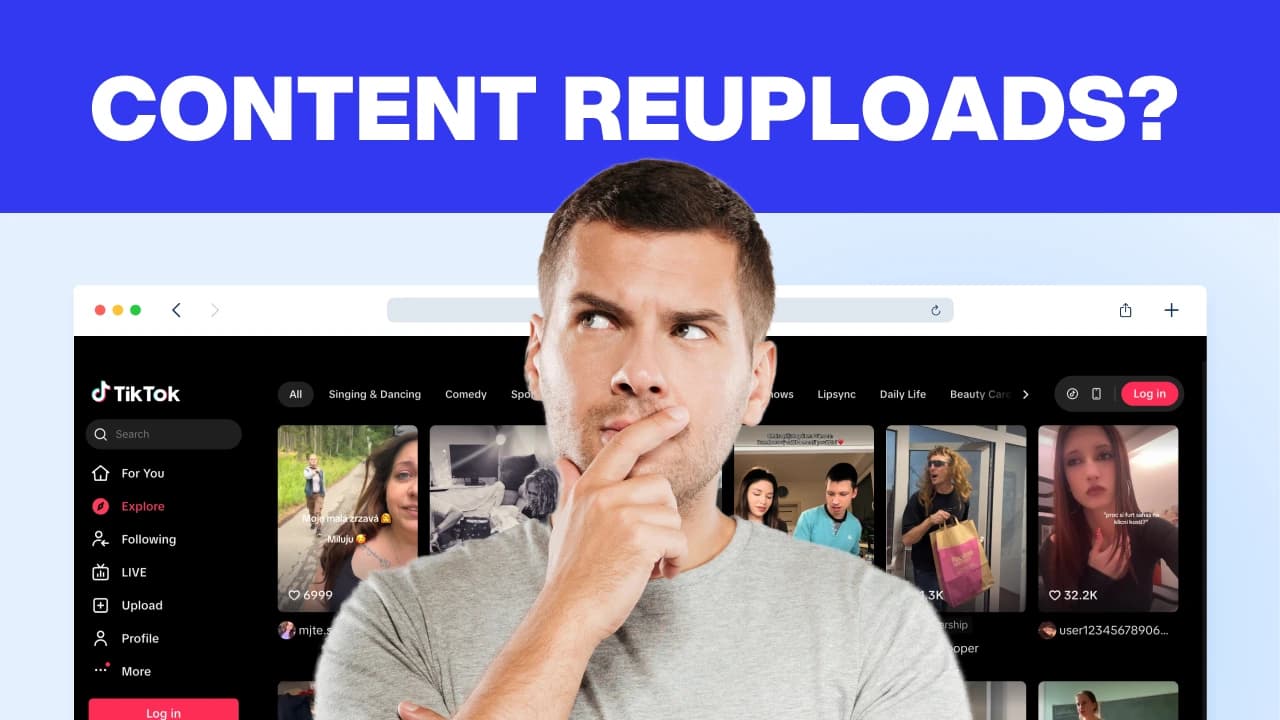
Should you check for reuploads of your content?
Once a video starts performing well, especially short-form content, it rarely stays in one place. Creators often expect a few reposts on obvious platforms. What usually surprises them is how far it actually spreads, and how differently the same clip gets reused.
So the answer to the question, “Is my viral clip showing up somewhere else too?”
Most of the time, yes.
In a lot of cases, it’s not malicious. Someone reposts a clip without credit, or crops it slightly and uploads it to another platform. For example, an original TikTok post ends up as a Pinterest video. It might be annoying, but it’s familiar.
Other times, it can be a bit uncomfortable.
Creators find their videos paired with music they don’t share a message with, reused in edits they never intended, taken out of context, or posted by accounts pretending to be them. We’ve seen creators discover entire profiles built around their content, sometimes with a slightly altered username and no mention of the original source. In the worst case scenario, the content is even being used as paid ads.
What’s usually the first step in understanding how you can check if your content is reuploaded somewhere is simply understanding how video reverse search works. We go into detail in this reverse video search guide, or you can just play around with our tool for reverse searching video directly.
It’s really not hard, you can definitely figure it out. Basically, you upload your viral video, the most distinctive keyframes get detected automatically, and you can let us look the results up for you, or do it manually yourself.
Once you see the results laid out clearly, it usually becomes obvious whether your content was reuploaded or not, and on what scale it was. Honestly, most people don’t realize how quickly popular content gets recycled until they actually look for it.
Quick map (what’s inside):
Content-Specific Reupload Patterns We Notice a Lot
Reuploads happen to almost everyone, but the way they happen depends heavily on the type of content you make.
Lifestyle and appearance-focused content
Creators whose content leans heavily on visuals, faces, or aesthetics tend to see very specific reuse patterns. One common example is short clips turned into looping visuals for music videos or “type beat” uploads. The same few seconds get reused over and over, sometimes slowed down, sometimes cropped, sometimes mirrored. Credit is usually missing, but if you don’t hate the music, it’s not always that harmful.
Fitness and gym videos
This is where things get more niche. Workout clips and transformation videos get reposted constantly. Motivation pages, fake coaching profiles, or generic fitness accounts often reuse the same footage to fill their feeds. In some cases, creators have found their videos used to promote programs or plans they have nothing to do with, which is where things start to feel off.
Educational or talking-head content
Creators explaining topics on camera, or using voiceover on top of graphics, often find clipped versions of their videos reposted as someone else’s page “original” content. The visuals stay the same, but the branding often disappears on purpose. These copies usually fly under the radar unless you actively search for them, since they can be harder to recognize than heavily face-focused videos.
Adult or NSFW material
This industry is probably the most digitally pirated one out there, so it’s not surprising that creators on platforms like Patreon, OnlyFans, Fansly, and others face reupload issues the most. They’re also the ones hurt the most, since this directly affects income and sensitive clips end up out of their control. Anyone in this field should seriously consider protecting their content using video reverse search and issuing removals when needed.
Real-World Creator Stories
There are plenty of real examples shared by creators who discovered reuploads through searching and takedowns.
In one case, a YouTuber noticed that a TikTok creator with around 800k followers was reposting his space-themed footage without any credit. As he described it, in some of the most popular videos with millions of views, he suddenly realized the footage was taken directly from his YouTube videos.
Commenters in that thread suggested copyright strikes and even watermarking, pointing out that TikTok often reacts slowly to infringement and that watermarking might be the only realistic way to keep some level of attribution.
In another case, a creator found his videos spread across TikTok and Douyin. By uploading his own video to TikTok and immediately filing a report, he managed to get the stolen versions removed within a day. Similarly, another creator traced an entire YouTube channel built on stolen content and received confirmation shortly after that the videos were taken down.
Reddit is full of stories like this. One streamer described seeing dozens of fake accounts reposting his clips on TikTok and Facebook, and how frustrating it was to get anything removed. Another talked about a thief who kept reuploading videos even after takedowns, sometimes gaining millions of views in the process.
A recurring point in these discussions is that stolen views aren’t free marketing. They cost creators reach, revenue, and control over their own identity. In some cases, people even build a full persona around someone else’s content, which makes it harder for viewers to tell who the real creator is.
Many creators also point out that patience and persistence matter. Repeated reporting works over time. Legal action is usually unrealistic, since it’s expensive and often impossible without knowing who’s behind the account. Instead, creators rely on documenting everything, collecting links and screenshots, and using platform copyright reporting tools. When the proof is clear, platforms usually act, even if it takes more than one report.
Here are two related threads: someone uploaded my video to tiktok and it has almost a… and stolen youtube content uploaded to tiktok or instagram…
Final thoughts
Reverse looking up your viral videos isn’t about panic or damage control. Most of the time, depending on the industry, reuploads aren’t harmful at all. Sometimes it’s even interesting to see how a clip travels and where it ends up.
These stories and specifics shared by users are genuinely interesting, and they show that checking where your content ends up can have real purpose. It can be about protecting your work, but it can also be as simple as having a bit of fun and seeing how your content influences small corners of the internet you’d never otherwise notice.
And if you ever want to check without guessing, a video reverse search approach gives you a clear way to do exactly that.